
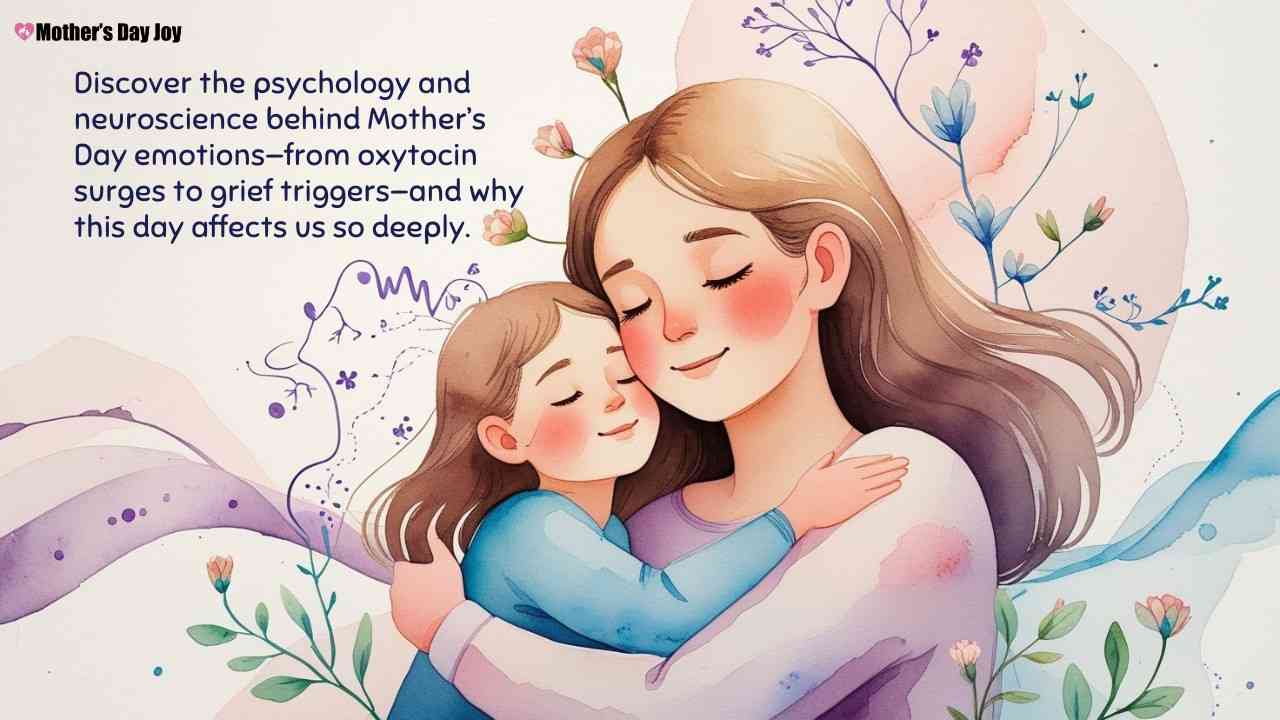
The Science Behind Why We Feel So Emotional on Mother’s Day

The Emotional Rollercoaster of Mother’s Day
Mother’s Day isn’t just another holiday—it’s a neurological and psychological phenomenon. Whether you’re overwhelmed with love, grief, or nostalgia, science reveals why this day hits harder than others.
In this guide, you’ll learn:
✔ The brain chemicals (oxytocin, dopamine) that amplify emotions.
✔ Why grief feels sharper on Mother’s Day (and how to cope).
✔ Cultural and evolutionary roots of maternal bonding.
✔ Expert-backed strategies to navigate intense feelings.
- The Neuroscience of Mother’s Day Emotions
- Psychology of Mother’s Day: More Than Just a Greeting Card
- 5 Ways to Navigate Overwhelming Emotions
- The Father’s Perspective: Why Dads Feel It Too
- How Social Media Rewires Mother’s Day Emotions
- Building Emotional Resilience: A Year-Round Practice
- FAQs: Science-Backed Answers to Emotional Questions
- Conclusion: Embracing the Science of Sentiment
The Neuroscience of Mother’s Day Emotions

1. Oxytocin: The “Love Hormone” Surge
Science Says: Oxytocin levels spike during bonding activities (Nature, 2022).
Mother’s Day Triggers:
- Hugging your mom → 20% increase in oxytocin (Journal of Neuroscience).
- Seeing childhood photos → Activates the brain’s reward system.
2. Nostalgia and Memory Activation
How It Works:
- The hippocampus retrieves emotional memories.
- Smells (e.g., mom’s perfume) trigger the olfactory cortex.
Pro Tip: “Nostalgia can reduce stress—if focused on positive memories.”
3. Grief and the Anterior Cingulate Cortex
For Those Missing Mom:
- The brain processes loss in the emotional pain center (same as physical pain).
- Mother’s Day reminders → reactivated grief cycles.
Psychology of Mother’s Day: More Than Just a Greeting Card
For the broader psychological picture, see our guide to the psychology of Mother’s Day.
1. Social Expectations vs. Reality
Pressure Points:
- “Perfect Day” myth → Disappointment if reality falls short.
- Social media comparisons → Loneliness or guilt.
2. The “Mother Wound” Phenomenon
Definition: Emotional pain from strained/absent maternal relationships.
How It Manifests:
- Avoidance of Mother’s Day.
- Overcompensating with gifts or gestures.
3. Evolutionary Roots of Maternal Bonds
Science Says:
- Infant survival depended on maternal attachment (Evolutionary Psychology).
- Modern celebrations tap into primal instincts.
5 Ways to Navigate Overwhelming Emotions
1. Name the Emotion
Why It Helps: Labeling feelings reduces amygdala activation (UCLA Study).
Try: “I feel [grateful/guilty/sad] because…”
2. Create a “Feelings Plan”
For Grief:
- Visit a meaningful place earlier in the day to avoid crowds.
For Stress: - Set boundaries (e.g., “No social media after 10 AM.”).
3. Use Rituals to Channel Emotions
Examples:
- Light a candle + share stories with siblings.
- Write a letter to mom (even if she’s passed).
4. Hack Your Hormones
Boost Oxytocin Naturally:
- Pet a dog → 15% oxytocin increase.
- Singing with family → bonds via synchronized brain waves.
5. Reframe the Day
For Complicated Relationships:
- Celebrate mother figures (aunts, mentors).
- Volunteer at a nursing home → “Collective care” effect.
The Father’s Perspective: Why Dads Feel It Too
Mother’s Day emotions aren’t exclusive to mothers and children — fathers experience a complex neurochemical cocktail of their own. Research on paternal bonding shows that fathers undergo hormonal shifts remarkably similar to mothers: oxytocin rises during caregiving, prolactin increases with infant contact, and testosterone dips as nurturing behaviours take over. On Mother’s Day, many dads report feeling a potent mix of gratitude, guilt (“Am I doing enough?”), and grief for their own mothers.
There’s also the “witness effect.” Watching your partner be celebrated as a mother — seeing your children express love for her — activates the brain’s empathy circuits (the anterior insula and anterior cingulate cortex) as powerfully as direct experience. Many fathers describe unexpected tears during Mother’s Day school assemblies or while reading cards their children made. This isn’t sentimentality; it’s the brain’s mirror-neuron system doing exactly what evolution designed it to do.
Pro Tip: If you’re a dad reading this, your emotions are data, not weakness. Use them: tell your partner specifically what you admire about her mothering. “You’re amazing” is nice; “The way you stayed patient during yesterday’s meltdown taught me something” is unforgettable.
How Social Media Rewires Mother’s Day Emotions
Social media has fundamentally altered the emotional landscape of Mother’s Day — for better and worse. On the positive side, platforms enable beautiful public tributes: the heartfelt post, the childhood photo thread, the video montage that makes Mum cry happy tears. These digital rituals create what psychologists call “social savouring” — amplifying joy by sharing it.
But there’s a darker side. The curated perfection of others’ celebrations triggers social comparison, and research consistently links this to decreased wellbeing. The mum scrolling through flawless brunches and designer gifts while sitting in pyjamas with a toddler’s cold may feel inadequate rather than celebrated. For those grieving, estranged, or struggling with infertility, the algorithmic flood of #Blessed posts can feel like an assault.
Studies on social media envy found that passive scrolling (watching without interacting) predicts negative mood, while active engagement (messaging, commenting meaningfully) predicts positive mood. The implication for Mother’s Day: don’t just scroll — participate. Send the message. Make the call. Post the tribute. Active love beats passive envy every time.
Pro Tip: Curate your feed deliberately on Mother’s Day. Mute accounts that trigger comparison, and consider a “post then log off” approach: share your tribute, then spend the day present with the people who matter.
Building Emotional Resilience: A Year-Round Practice
The intensity of Mother’s Day emotions — the joy, the grief, the nostalgia — doesn’t have to be confined to a single Sunday. Psychologists recommend “emotional maintenance” practices that build resilience for the big days and deepen everyday connection.
- The weekly three-minute call: Research on relationship maintenance shows that brief, regular contact predicts closeness better than occasional grand gestures. A three-minute “thinking of you” call every Sunday does more than one elaborate May brunch.
- The gratitude journal (shared): Keep a notebook in a common area where family members jot one thing they appreciate about Mum. Read them aloud on Mother’s Day — you’ll have a year’s worth of material.
- The “hard day” plan: If Mother’s Day is difficult (grief, estrangement, distance), plan for it. Schedule something nourishing — a walk with a friend, a volunteer shift, a favourite film. Having a plan transforms dread into agency.
- The legacy interview: Once a year, record Mum answering questions about her life: her childhood, her dreams, her advice. These recordings become priceless, and the act of asking deepens your bond in the present.
Pro Tip: Start this week, not next May. Emotional resilience is built in ordinary moments — and by the time Mother’s Day arrives, you’ll have eleven months of connection to celebrate.
FAQs: Science-Backed Answers to Emotional Questions
1. Why do I cry when I hear “Mother’s Day” ads?
A: Auditory cues activate the superior temporal gyrus, linked to emotional memories.
2. Is it normal to feel nothing on Mother’s Day?
A: Yes! Emotional numbness is a protective brain response.
3. How can I stop comparing myself to others?
A: Limit social media → Dopamine-driven comparisons drop by 30% (Journal of Social Psychology).
4. Why does grief feel physical?
A: The somatosensory cortex maps emotional pain as bodily sensations.
5. Can men feel emotional on Mother’s Day too?
A: Absolutely. Testosterone doesn’t block oxytocin release in paternal bonds.
Conclusion: Embracing the Science of Sentiment
Mother’s Day emotions aren’t “just in your head”—they’re a complex interplay of biology, memory, and culture. Whether you lean into the joy or acknowledge the pain, understanding the science can help you navigate the day with self-compassion.
Final Thought:
“The heart’s capacity to ache is equal to its capacity to love. Both are worth celebrating.”
Browse our collection of 600+ Mother’s Day images
Choose your favourites – quotes, floral, family-themed & more


